


The Holden Family Fire Safety Challenge
The Holden's Fire Safety Course Examples
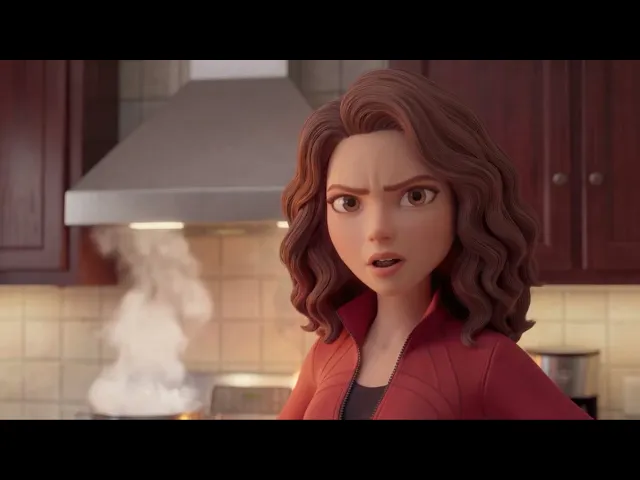
The Holden Family Fire Safety Challenge - Intro Teaser
The Challenge
Fire safety education for children has to accomplish two goals that do not always play nicely together: communicate that fire is genuinely dangerous without making the experience frightening or overwhelming.
The course needed to make safety information:
Age-appropriate and easy to understand
Visually engaging without making hazards feel like a game
Interactive enough to encourage exploration and recall
Accessible to learners using keyboards, screen readers, captions, or alternative media
Flexible enough to become the foundation for a larger emergency-preparedness series
The experience also needed to move beyond simply listing rules. Learners should recognize hazards in context, understand why they are dangerous, and practice making decisions during an emergency.
Learning Experience
Explore the Holden Home
Learners enter an illustrated, animated version of the Holden family home and explore it room by room. Interactive hotspots are integrated into familiar household scenes, allowing children to discover hazards through observation rather than being handed another checklist disguised as a course.
Potential trouble spots include:
An overloaded wall outlet or power strip
A space heater placed too close to bedding or curtains
Cooking left unattended
Pot handles facing outward from the stove
Damaged or improperly used electrical cords
Devices charging in a bed or beneath blankets
Toys, furniture, or clutter blocking an escape route
Missing, poorly located, or neglected smoke alarms
Correct selections reinforce safe behavior, while incorrect selections provide gentle feedback and an explanation of the potential consequences.
The Fire Safety Challenge
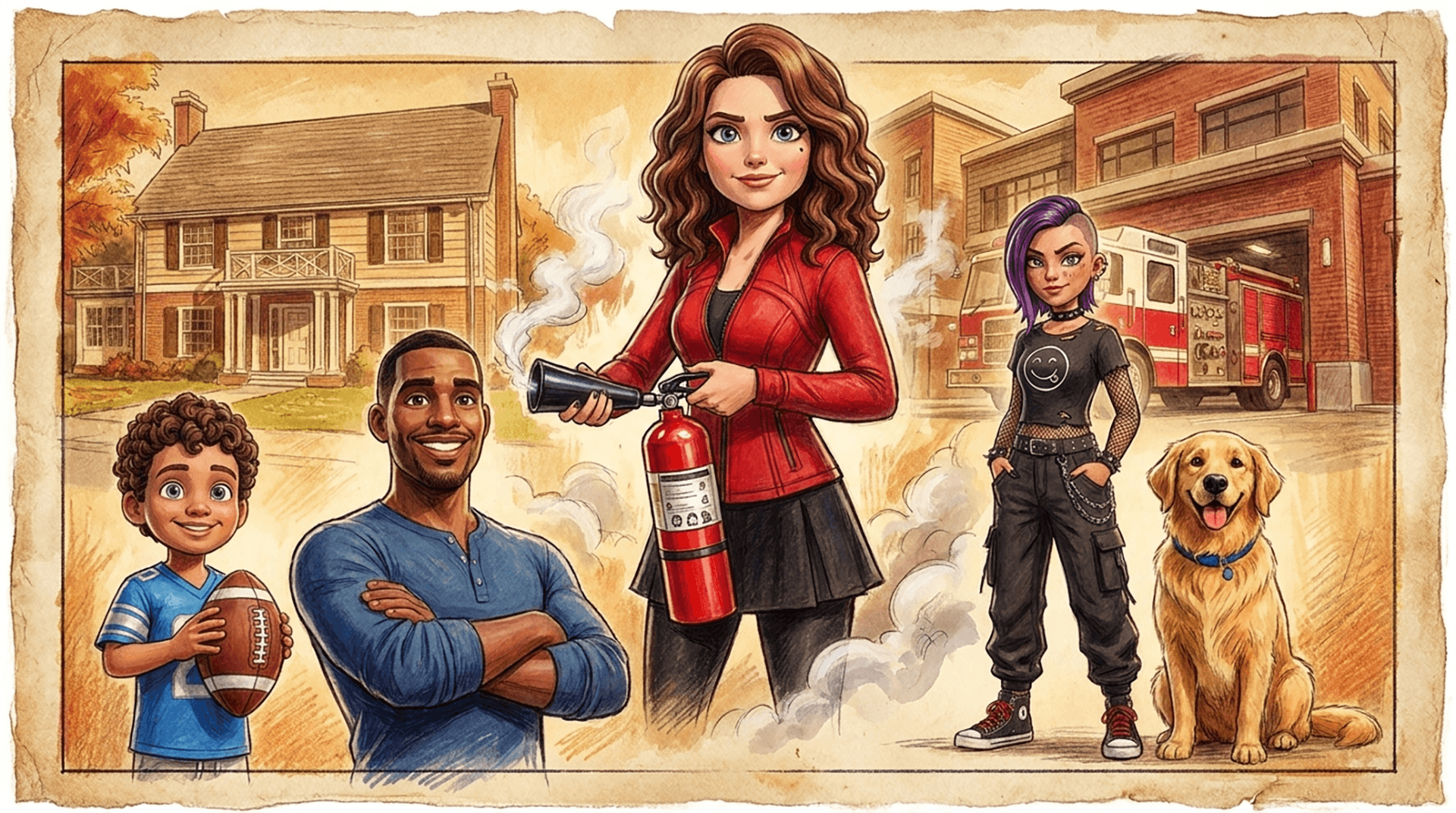
The course concludes with a branching escape challenge in which the learner plays as each member of the Holden family.
Each character begins in a different part of the house and faces a different set of conditions. The learner must recognize the smoke alarm, evaluate available exits, stay low when smoke is present, close doors when possible, leave belongings behind, reach the family meeting place, and avoid returning to the house.
Playing from multiple family perspectives reinforces that a successful escape plan must work for everyone. It also allows the challenge to introduce different decisions without turning the final activity into a single, predictable path.
My Role
I am leading the creative and interactive production of the course, including:
Establishing the visual direction and overall learner experience
Designing the course interface and navigation system
Creating the Holden family characters and home environments
Producing room illustrations, household props, hazards, and visual feedback
Developing character animation and environmental effects
Designing the interactive hotspot activities
Developing the branching family escape challenge
Building and testing the interactions in the studio’s proprietary authoring platform
Applying accessibility requirements throughout the design and development process
Creating a reusable visual and interaction system for future courses in the series
AI-Assisted Production
The project uses AI-assisted techniques to support character development, environment creation, visual consistency, animation, and production speed.
AI is being used as part of a directed creative workflow rather than as a replacement for design. Generated material is edited, composited, corrected, and adapted to meet the course’s instructional, stylistic, technical, and accessibility requirements.
This approach makes it possible to create a visually rich family home, multiple characters, animated hazards, and branching emergency scenarios at a scale that would normally require a much larger illustration and animation team.
UI/UX Approach
The interface is designed to feel inviting and exploratory while keeping safety information clear and immediately understandable.
Large interaction areas, simple navigation, recognizable visual cues, limited on-screen text, and consistent feedback patterns support younger learners and reduce unnecessary cognitive load. Important information is reinforced through a combination of narration, animation, text, and visual demonstration.
The design also separates exploration from emergency response. The home walkthrough gives learners time to investigate and understand hazards, while the final challenge introduces urgency and applied decision-making after the foundational concepts have been established.
Accessibility and Technical Approach
The course is being developed in a new proprietary authoring platform built around open, standards-based HTML5 output. The resulting course code remains inspectable, editable, and maintainable rather than being locked inside a proprietary playback format.
Section 508 and WCAG accessibility requirements are built into the platform’s component architecture and the course-production workflow. Planned accessibility features include:
Complete keyboard operation
Visible focus indicators
Logical navigation and focus order
Semantic HTML structure
Screen-reader-compatible controls and feedback
Alternative text and extended descriptions
Captions and transcripts for narrated or animated content
Sufficient color contrast
Alternatives for information communicated through color
Reduced-motion or static alternatives where needed
Accessible equivalents for visual hotspot and escape interactions
Accessibility will be validated at both the platform and course-content levels because an accessible authoring system is only part of creating an accessible final experience.
Current Outcome
The project is currently in development and will serve as both a complete children’s fire-safety course and a demonstration of the studio’s new HTML-based authoring platform.
It is also establishing the reusable design system for a broader family-preparedness series. Character models, interface components, interaction patterns, accessibility behaviors, and environmental assets developed for this course can be adapted for future experiences involving severe weather and other emergency scenarios.
What This Project Demonstrates
Children’s learning experience design
Scenario-based safety education
Custom UI/UX design
Interactive hotspot development
Branching simulations and decision-making
Character-driven learning
AI-assisted illustration and animation
Accessible HTML5 eLearning development
Section 508 and WCAG-aware interaction design
Visual storytelling for serious subject matter
Development of reusable course and product systems
Translation of public-safety guidance into applied learner practice