
EVM 1100: Fundamentals of Earned Value Management
Examples of the Magical Word of Eveum
Pre-visualization Animation
Summary
This Defense Acquisition University course was intended to introduce early-career acquisition professionals to the fundamentals of Earned Value Management, a topic that is essential, powerful, and famously capable of draining the joy out of a room. Despite EVM’s importance in managing cost, schedule, and performance, learners often experience it as abstract, intimidating, and disconnected from real work.
EVM 1100 set out to change that by reimagining foundational EVM concepts as a scenario-based, narrative learning experience. The goal was to replace passive explanation with engagement, metaphor, and story, helping learners understand not just what the metrics mean, but why they matter and how they apply in practice.
Solution
After an initial development effort failed to meet expectations, the project was in trouble. A senior instructional designer and I were asked to step in and rescue it by changing direction instead of continuing down a path that clearly was not working.
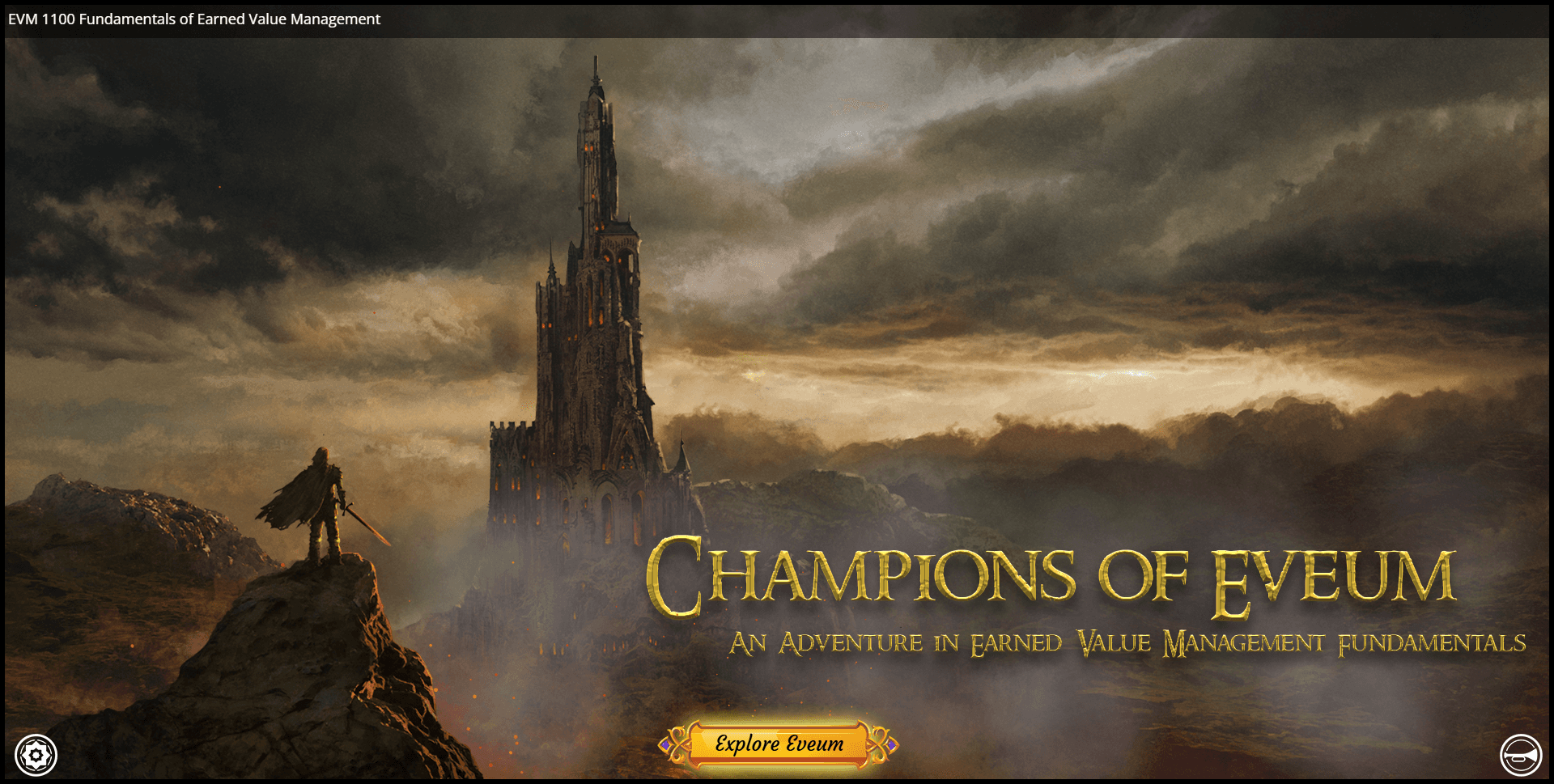
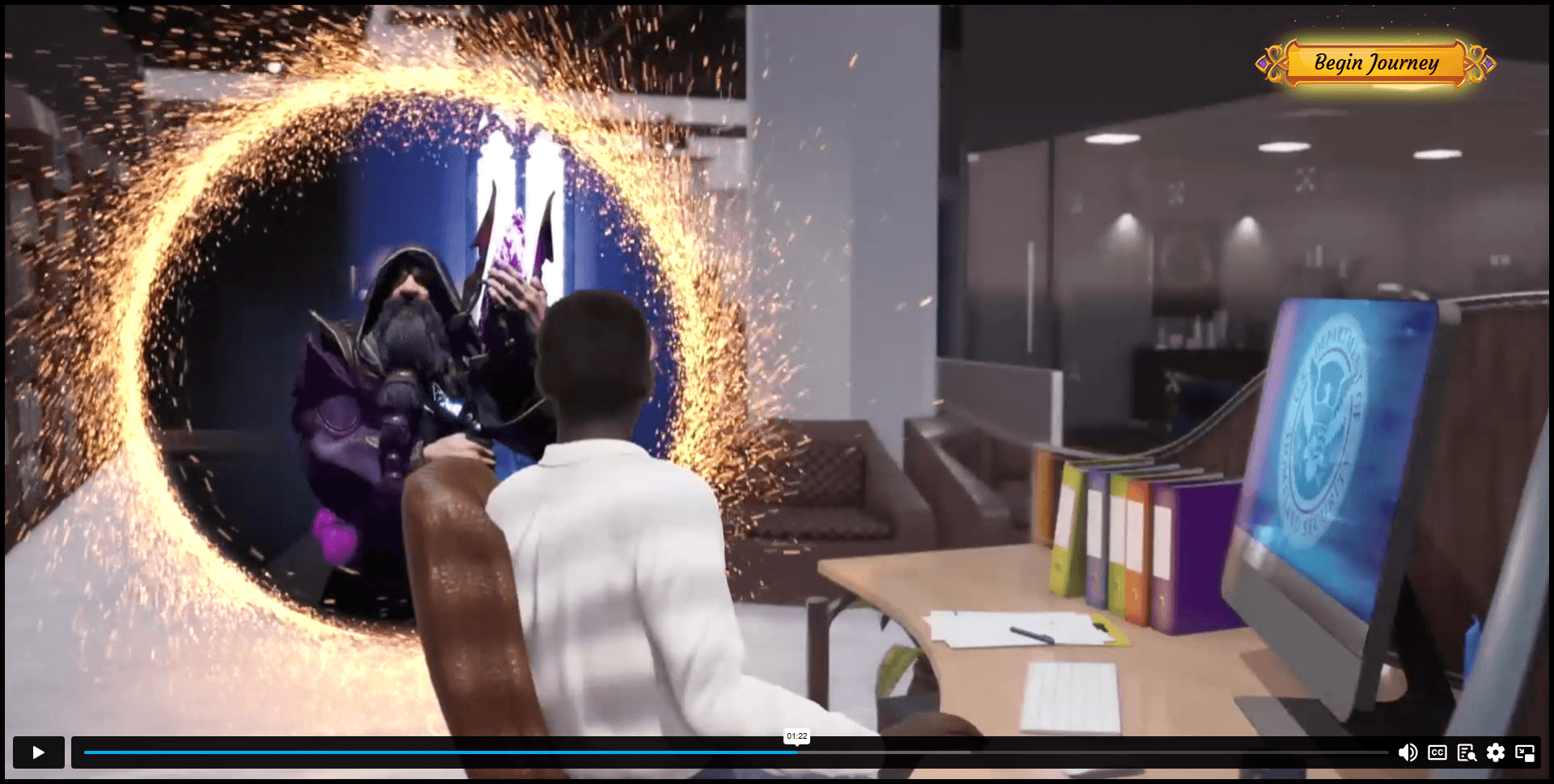
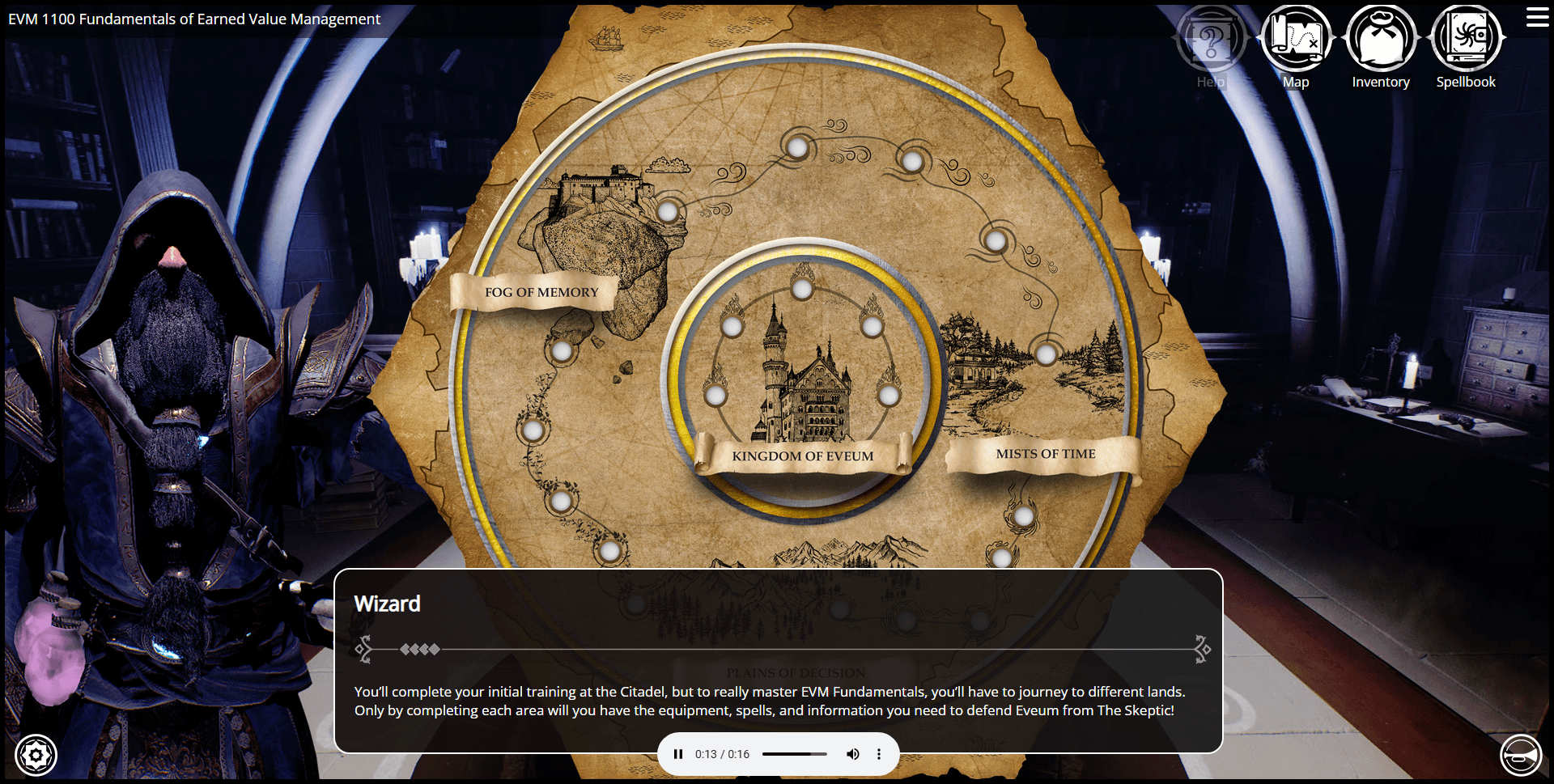
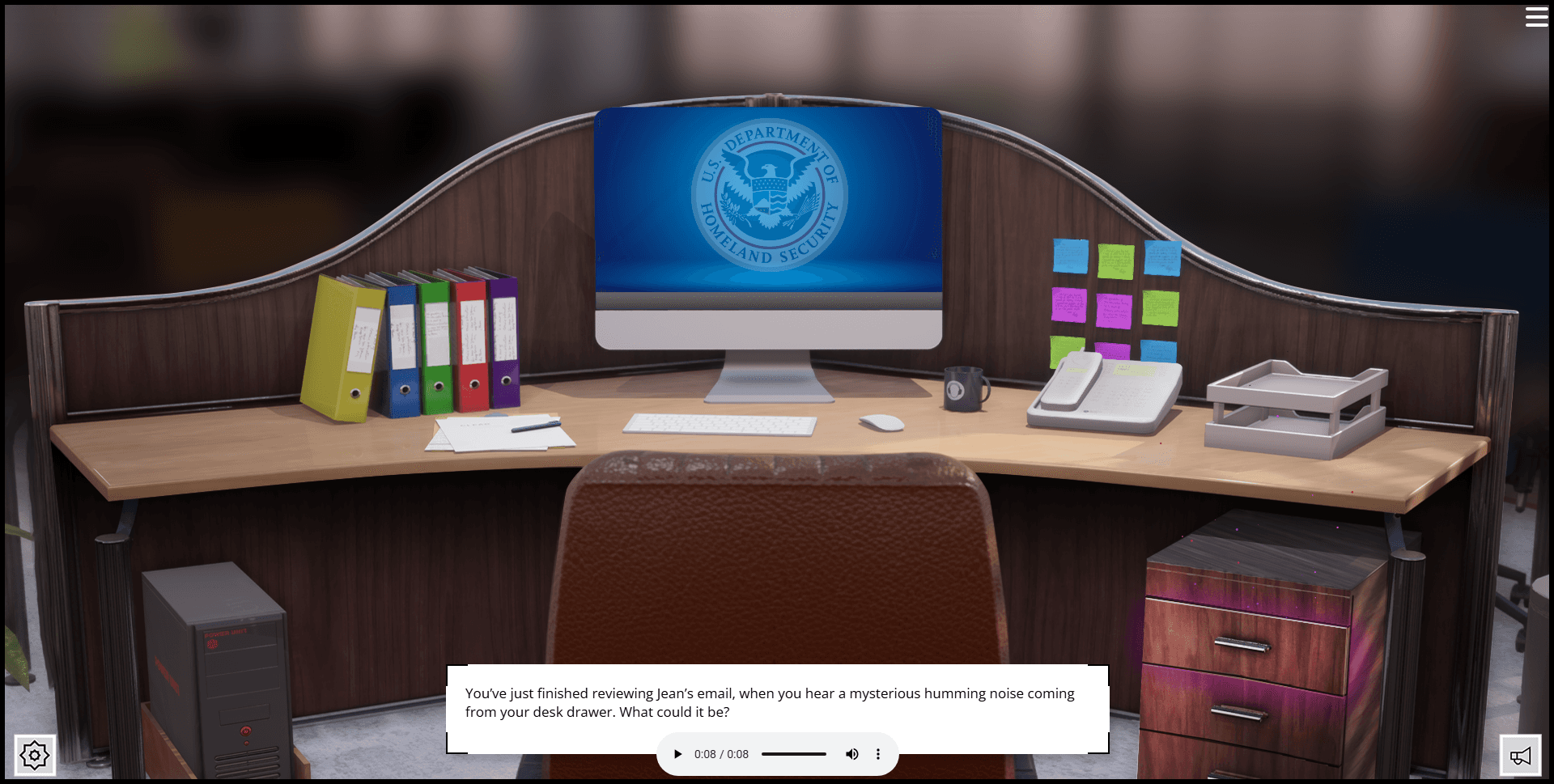
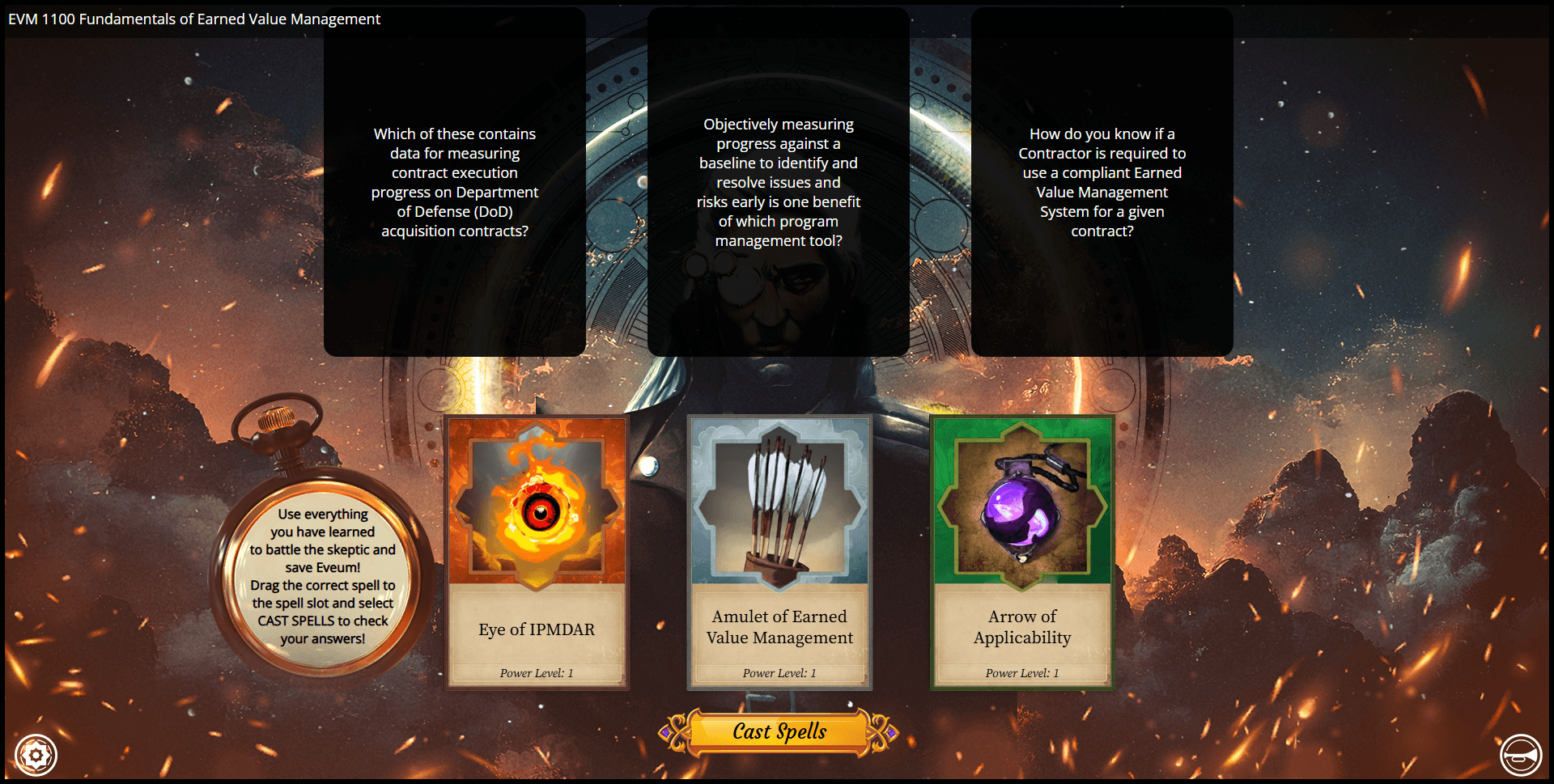
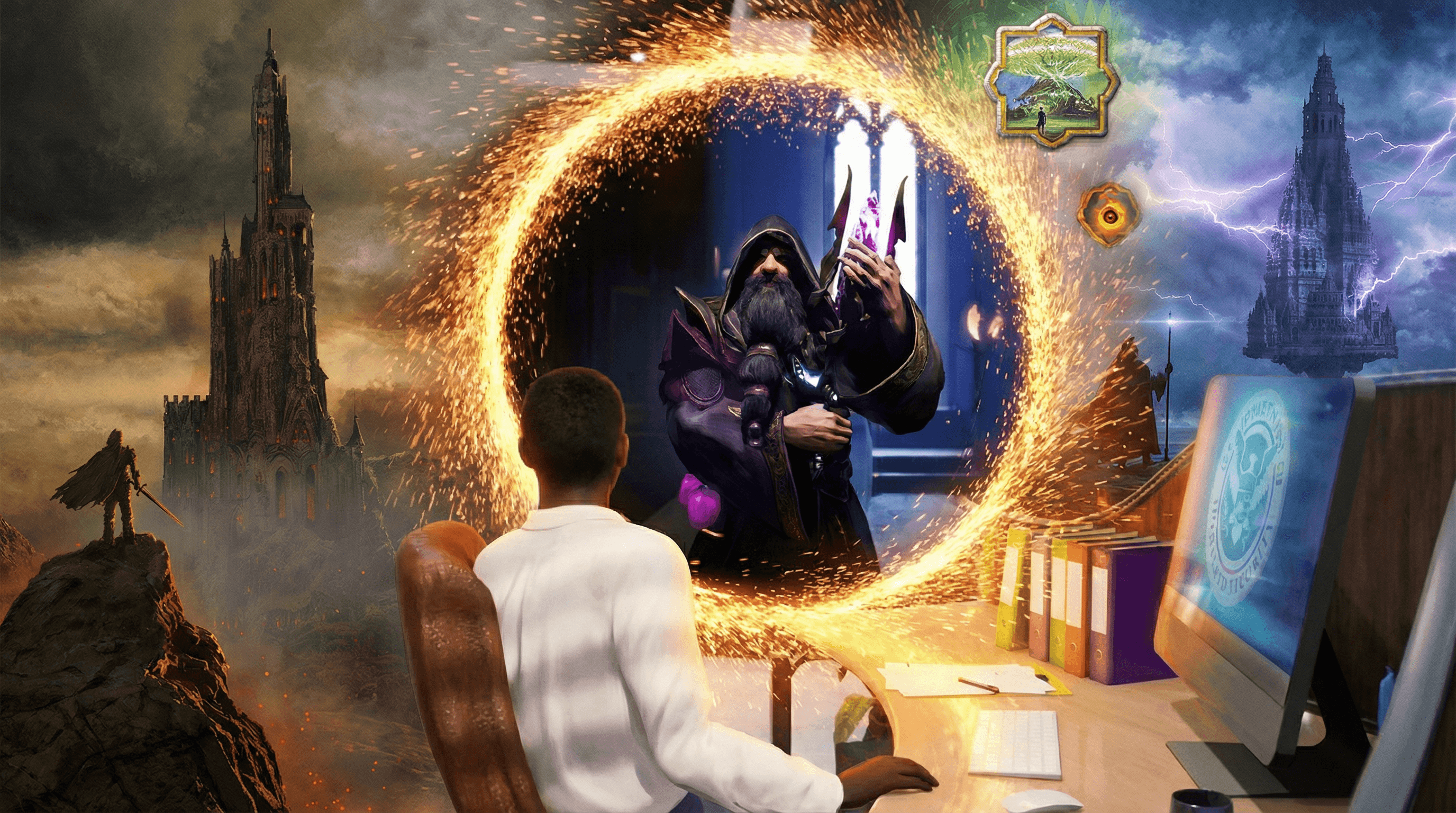
We reimagined EVM 1100 as a narrative, scenario based experience called M is for Magic. Learners began in a familiar office before being pulled into the mythic realm of Eveum, where confusion around EVM took human form as the Cynic. The goal was not fantasy for its own sake, but using metaphor to make complex concepts click before learners mentally escaped.
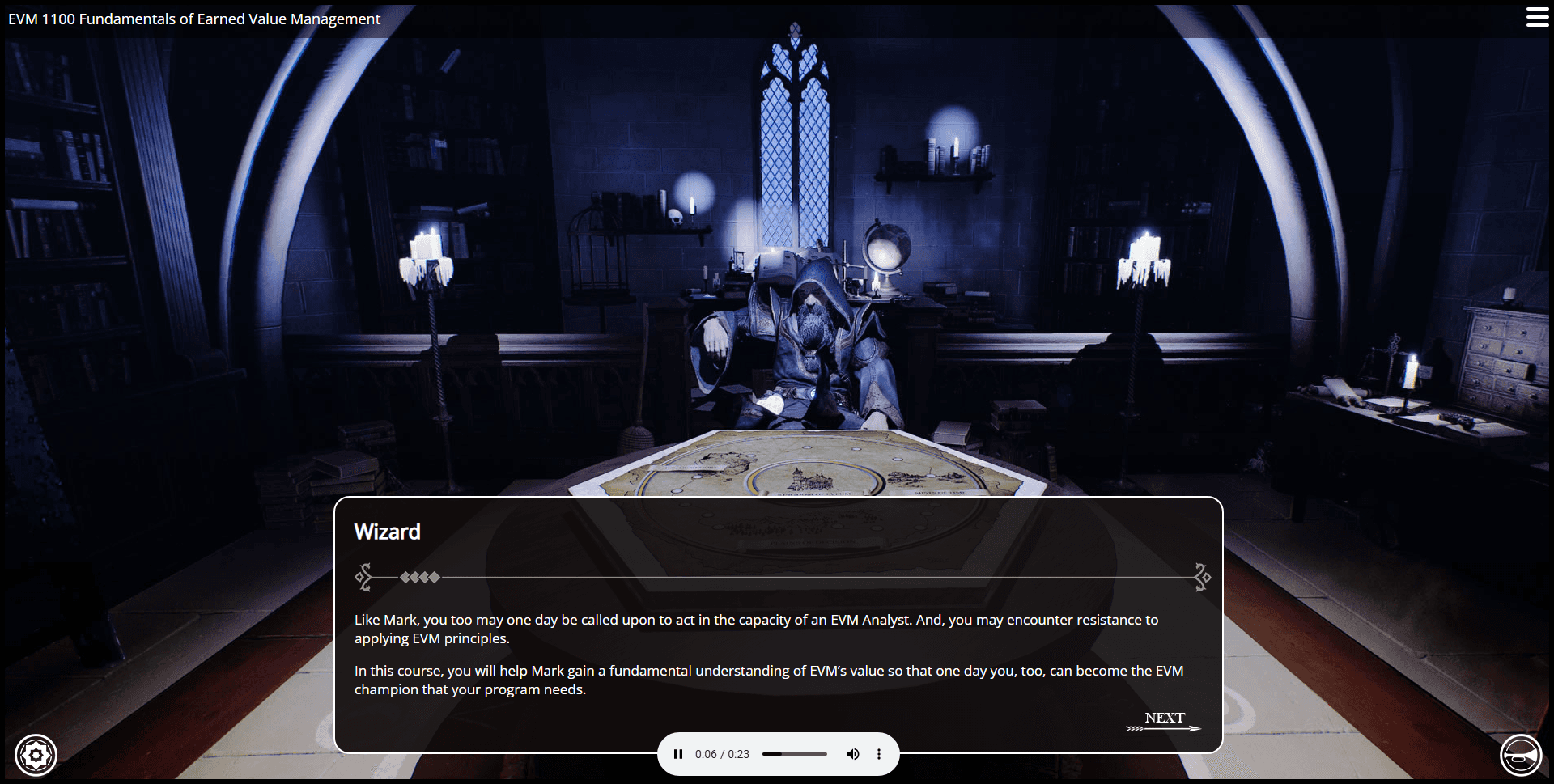
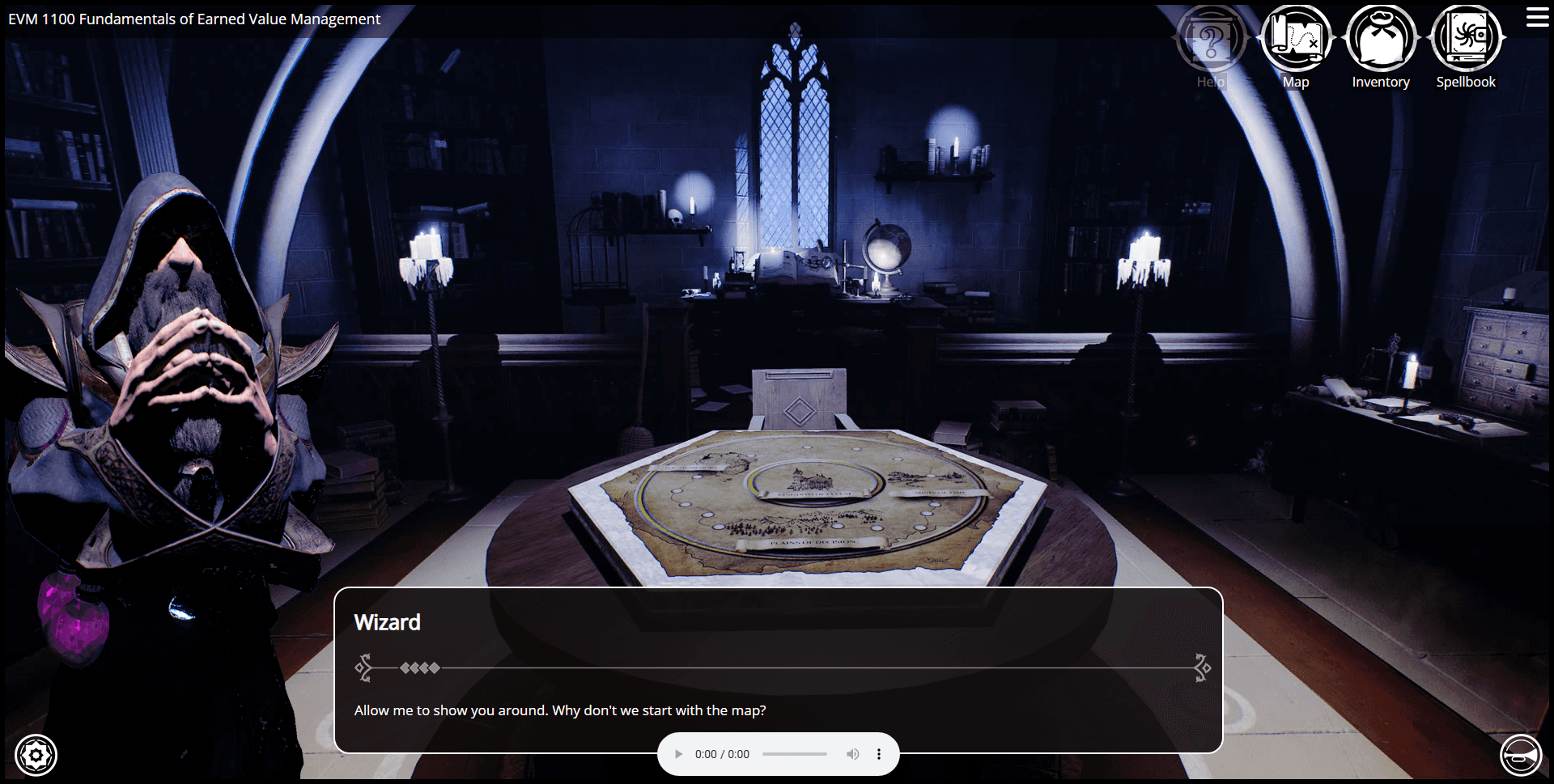
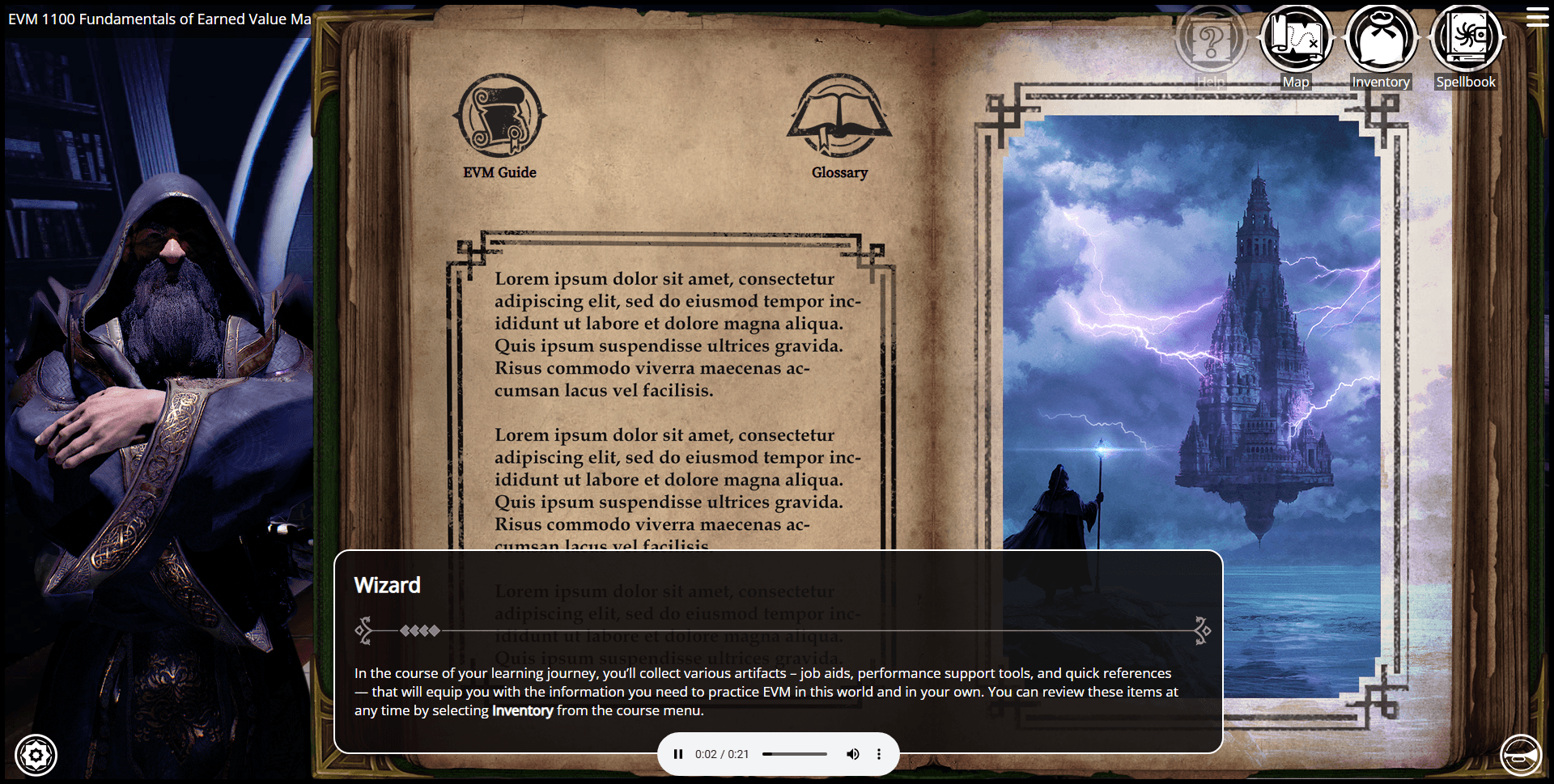
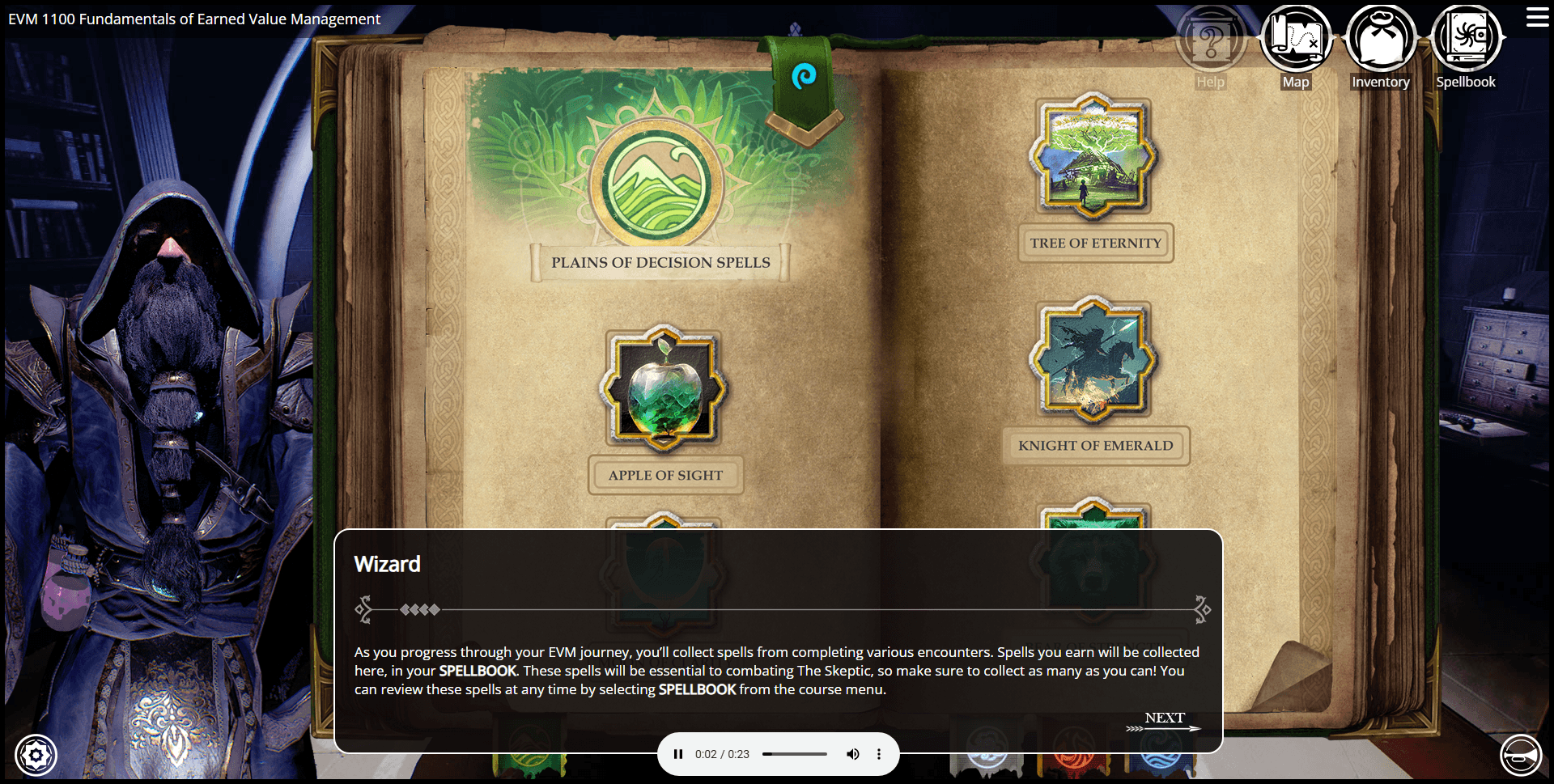
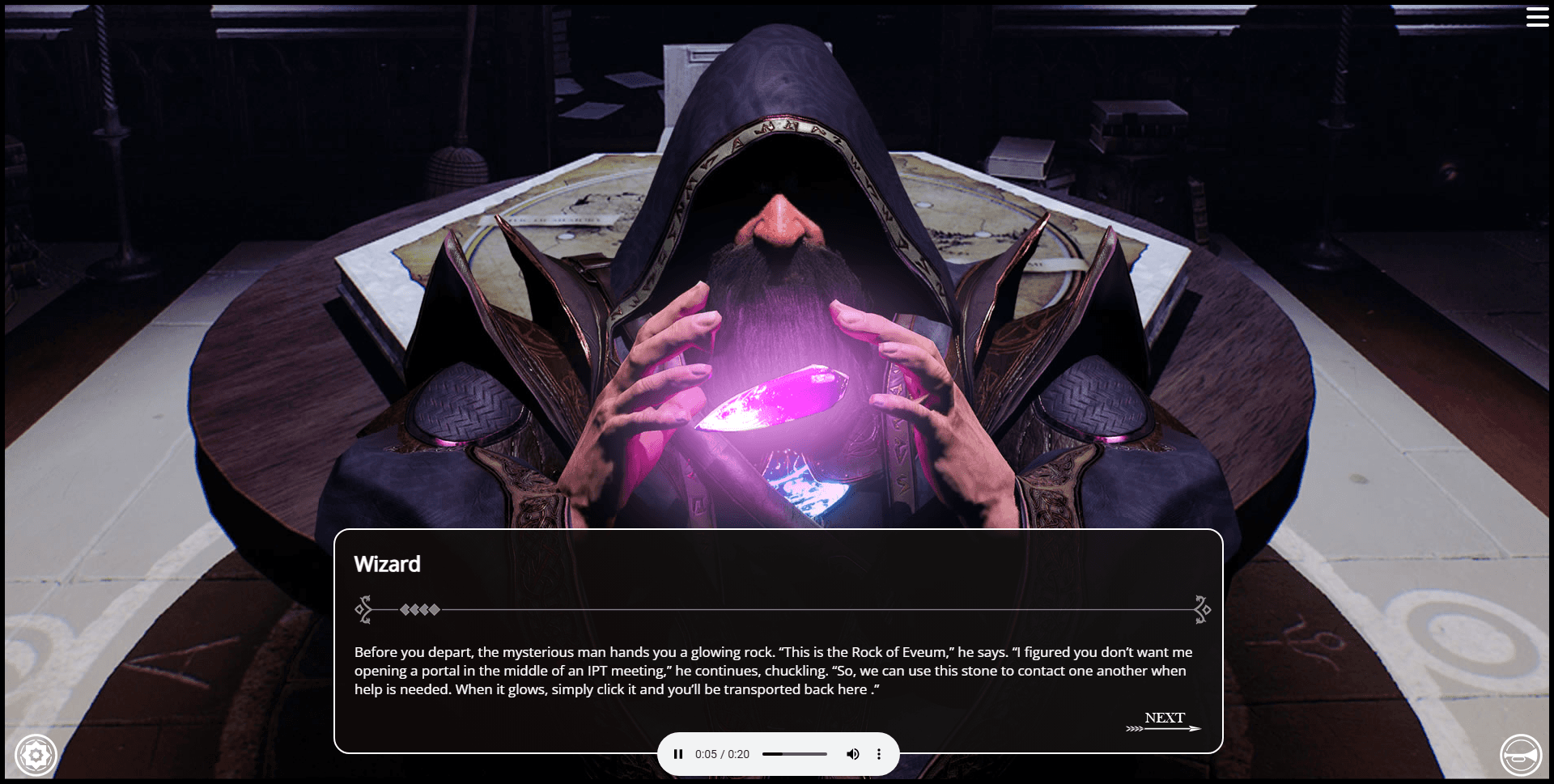
Using Unreal Engine, we created high fidelity previsualizations to demonstrate how cinematic storytelling and interactive scenarios could improve engagement. Learners moved between environments like a modern office and a wizard’s lair, guided by a mentor who translated CPI, SPI, Schedule Variance, and Estimate at Completion into practical decision making. Yes, spreadsheets became quests. Surprisingly effective.
Metahumans supported realistic business characters, while custom fantasy assets anchored the metaphor. The proof of concept showed how a struggling course could be transformed into an engaging, job relevant experience. The project was ultimately paused when the client subject matter expert departed, preventing full production before the magic fully stuck.
My Role
I was brought onto EVM 1100 as part of a recovery effort after the original approach failed to land. Working with a senior instructional designer, I helped reimagine the course around scenario based storytelling and cinematic visualization, with the goal of making EVM concepts actually click instead of quietly existing.
I created the previsualization animations that communicated the new direction and worked with a 3D artist in Unreal Engine to build the wizard character, the wizard’s lair, and the modern office environment. I rigged the wizard, adapted Metahumans into believable business characters, and made sure the fantasy and real world visuals played nicely together.
I also oversaw UI look and feel and collaborated with a graphic designer to keep the experience visually consistent and instructionally focused. The result was a clear, engaging proof of concept that showed how a struggling project could be stabilized and repositioned into something viable. The course did not move forward, but the vision did, which is often the hardest part to deliver.